Overview
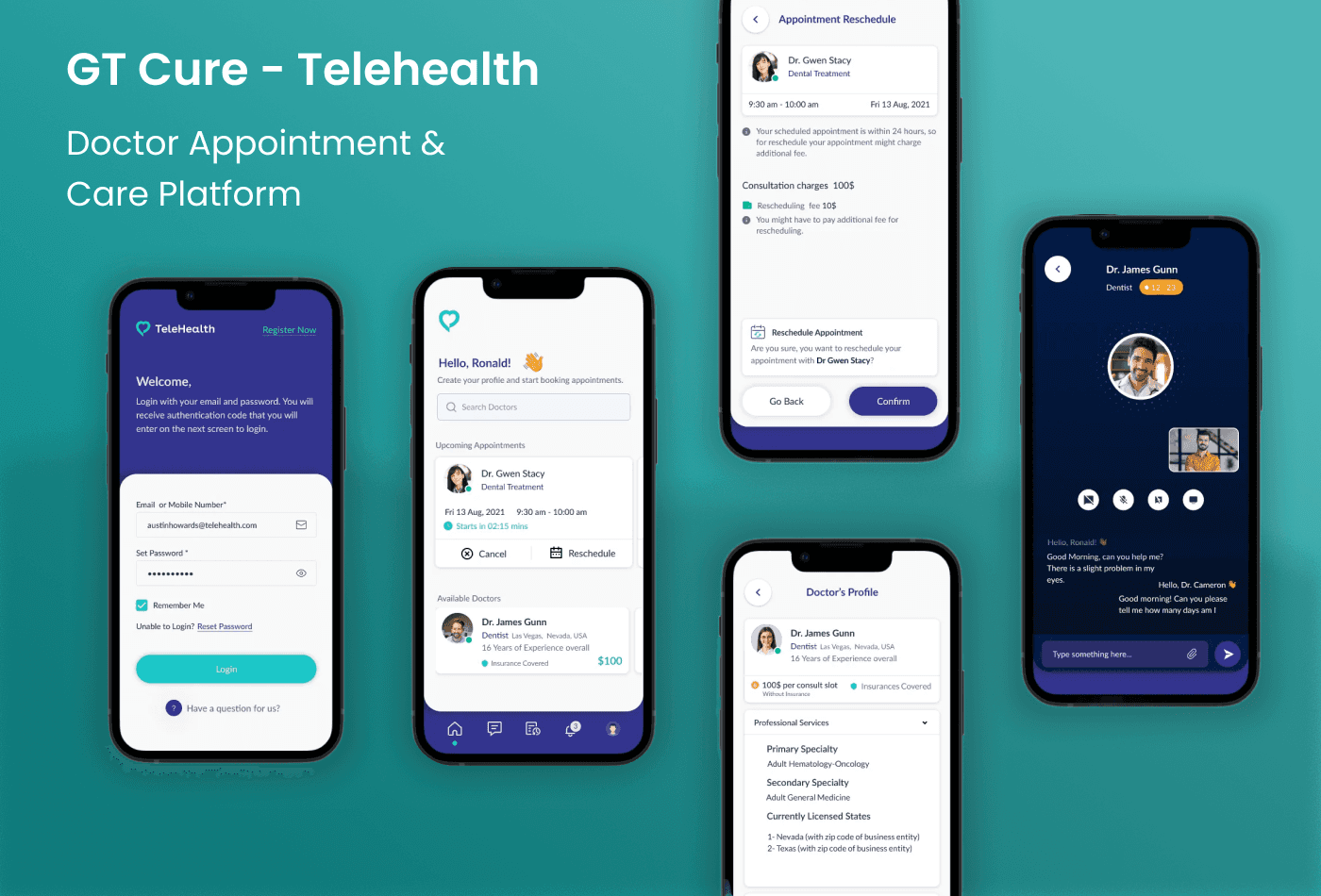
GT Cure is a telehealth mobile app built for two fundamentally different users — patients who need fast access to care, and doctors managing packed schedules. The goal wasn't simply to digitise a consultation. It was to make remote healthcare feel as reliable and frictionless as seeing a doctor in person, for both sides of the interaction simultaneously.
The problem
Getting healthcare remotely in India meant stitching together four or five separate interactions — a Google search to find a doctor, a phone call to check availability, a separate app to book, and another for the video consultation. Every handoff was a dropout point, and most patients gave up before finishing the process.
Doctors had it just as bad. Most were managing their digital availability through WhatsApp broadcasts and paper appointment books. There was no single tool that handled schedule management, patient history, and consultation workflow in one place. So they used none — and patients felt it.
Design approach
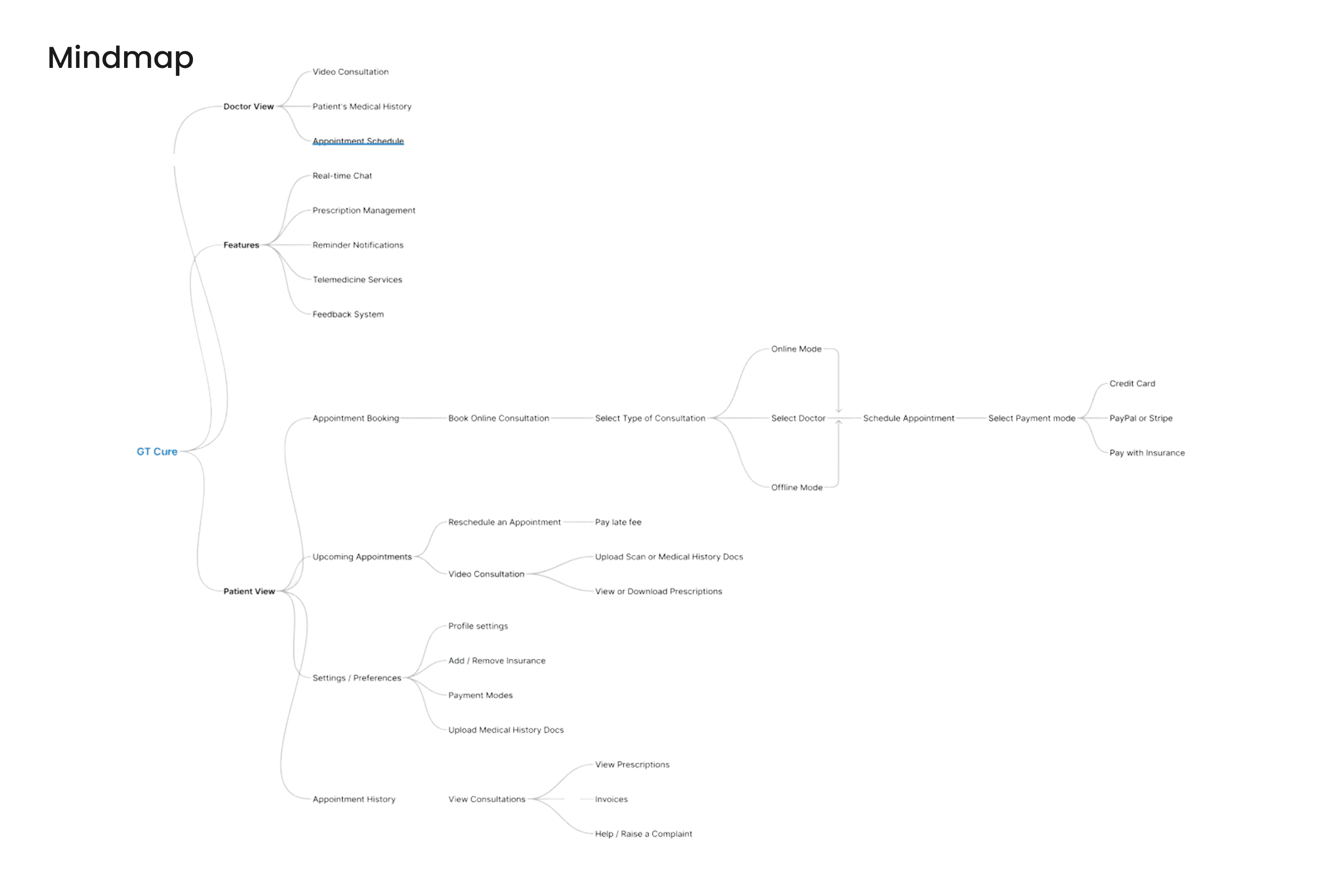
We mapped both user journeys end-to-end before designing any screen. Patient: discover → book → prepare → consult. Doctor: see schedule → review patient → run consultation → follow up. The goal was for every handoff between steps to feel invisible — not like moving between screens, but like moving through a single coherent experience.
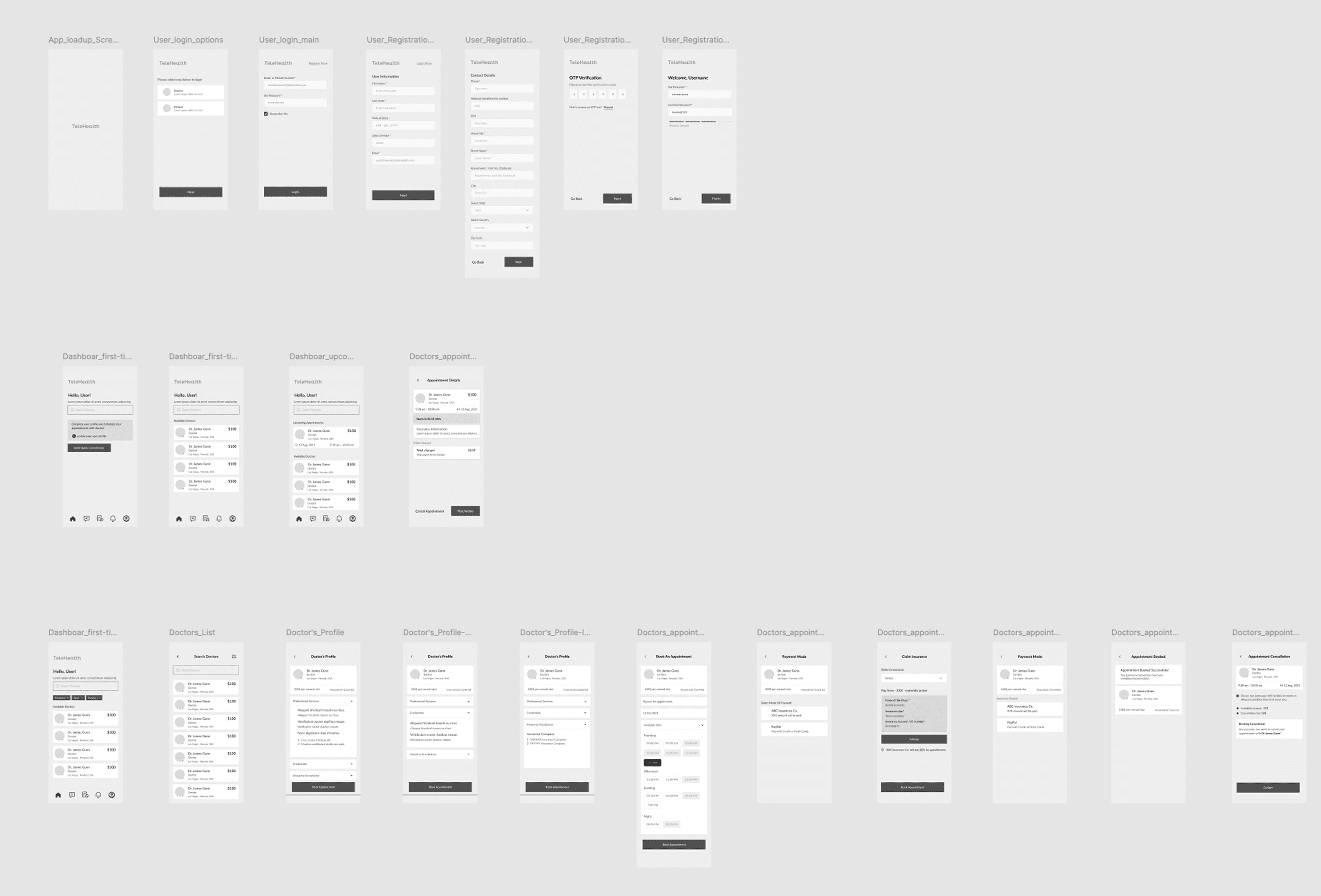
For patients, the booking flow went from six steps in early wireframes to two. Everything we already knew — the doctor's fee, appointment type defaults for that specialty, the patient's saved details — was pre-filled. The only real decisions left were: which doctor, and which slot.
For doctors, the dashboard was designed around the next two hours. What's happening now, what's coming, and who am I about to speak with. Patient history surfaced as a lightweight pre-call briefing: last visit reason, key notes, ongoing prescriptions — everything needed to walk into a consultation prepared, without diving into full records.
The visual palette — deep indigo and white — was a deliberate positioning choice. Healthcare apps either feel clinically cold or too consumer-light to inspire confidence. This sits between: calm, authoritative, and trustworthy in a domain where trust determines everything.
Key decisions
One app, two personas. Instead of separate patient and doctor apps, we used role-detection at signup. This kept the backend simpler and let us maintain a single codebase — but required rigorous architecture to ensure neither persona ever encounters UI meant for the other. Patients should never see a consultation management view; doctors should never see a doctor discovery screen.
Booking as a single decision. The instinct in healthcare software is to collect everything upfront — reason for visit, appointment type, duration, health records. We stripped the booking flow to the bare minimum. One decision: time slot. Everything else either auto-populated or became optional. Fewer steps meant more completed bookings.
Context before every consultation. Doctors consistently flagged "catching up on a patient I haven't seen in months" as a major time cost. Our solution: a focused briefing screen that appears when the doctor taps Join — three previous interactions, any ongoing prescriptions, and a single note field for this visit. Thirty seconds to feel prepared, rather than five minutes of scrolling.